Photo from Wikimedia Commons
ether.fi Cash can work as an everyday card for a UAE resident who already holds crypto, because Direct Pay turns an eligible stablecoin balance into card payments without borrowing. The decisive limit is cost: the available reward and FX information does not establish a dependable net dirham cost, so no fixed saving should be assumed.
The publisher may receive a referral reward if readers join through ether.fi Cash; there is no paid partnership. No campaign is confirmed for this link, so no newcomer benefit or fixed saving is promised.
Photo from Wikimedia Commons
CONTENTS
Getting Started: Eligibility and Wallet Support
ether.fi’s help center lists the UAE among the jurisdictions where the physical Cash card is currently available and says the product is open to eligible Personal and Corporate members in listed countries. That is availability, not approval: KYC and compliance checks still apply, and the listing does not guarantee that a particular applicant will be accepted. Availability may change with regulatory or operational requirements.
The International card terms add individual conditions. Users must be 18 or older and complete onboarding with the information and documents required by law; issuance is at the provider’s discretion, further checks can follow, and an on-screen order receipt is not acceptance. Under those International agreements, the user must also attest that they are not a U.S. person. The card is for personal, family or household use, and transactions outside consumer purposes can be blocked.
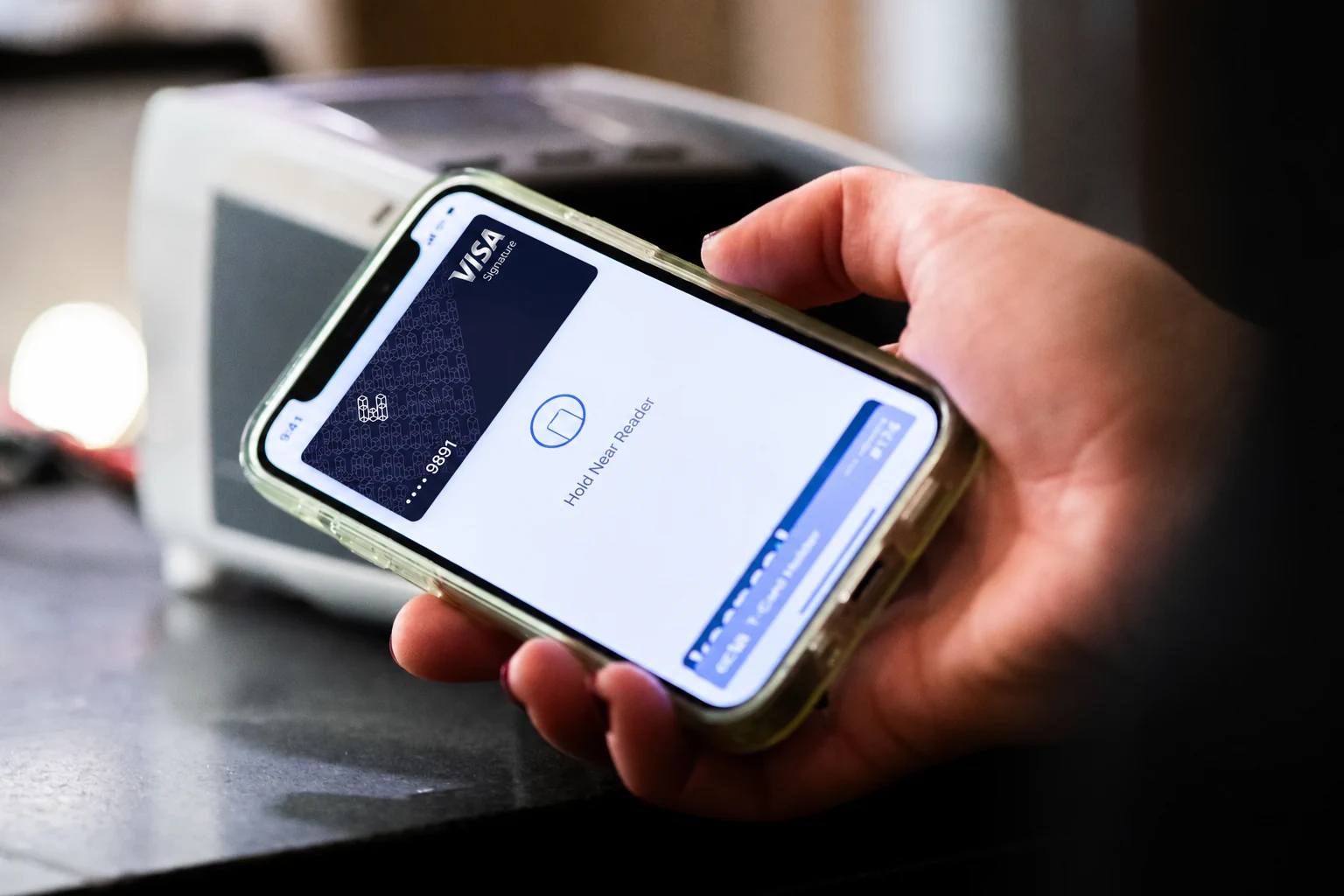
Apple Pay, Google Pay and contactless payments are listed at all four membership levels, and the app shows the virtual-card allowance and fee before an order. That listing covers availability, not setup steps or merchant acceptance, and allowances or fees may vary by region.
The card is issued by Third National under a Visa licence, but the International agreements do not say which of their Inc. or Ltd. versions applies to a UAE resident, and they name no UAE licence or regulator. That account-level uncertainty matters when reading the fee schedule; it is not UAE regulatory approval.
Direct Pay and Borrow: Two Ways to Spend
The usual question about how crypto credit cards work has a specific answer here: Direct Pay spends a funded balance rather than creating a loan. A purchase is deducted immediately from the ether.fi Vault, USDC first and LiquidUSD only when no USDC is available. Other vault assets are not eligible at this time, and the help center says the list may grow. Crypto is converted to the merchant’s currency at the point of sale.
The help page says there is no interest or fee beyond ‘standard transaction costs’, but does not itemise them; that is not a guarantee that an AED purchase carries no conversion cost.
The wallet is self-custodied. The International terms require the user to authorise smart-contract withdrawals of USDC to settle card payments, and the issuer says it has no custody or control over wallet contents. Control and risk stay with the user: the terms do not mention deposit protection, and third-party protocol services are used at the user’s own risk. The terms name USDC and ETH or other approved cryptoassets, while the current Direct Pay list is narrower.
Borrow is the credit-like side. Enabled vault assets that qualify as collateral support a borrowed balance. Interest begins immediately at a variable APY from the underlying lending market, identified as Aave v4 markets, and compounds with no grace period, billing cycle or minimum payment. Each asset has its own collateral factor, so capacity depends on the mix; liquidation risk moves with prices, interest and the position, and a liquidation takes repayment from collateral. A Borrow refund does not automatically reduce the debt.
Direct Pay spends a balance; Borrow creates a position that needs monitoring and repayment.
Cashback: A Conditional Reward
Cashback is progressive on total calendar-month spending for Core, Luxe and Pinnacle members. USD purchases start at 3%, fall to 1%, then 0.5%, with thresholds at $2,000/$3,000 for Core, $10,000/$20,000 for Luxe and $50,000/$80,000 for Pinnacle. EUR purchases use lower USD-equivalent bands: 3%, then 1%, with 0.1% only in the top band. One monthly counter covers both currencies; declined transactions and blocked merchants do not count, refunds and reversals subtract, and the progressive bands reset each month.
The cashback page shows no VIP ladder and does not set an AED rate. Converting an AED transaction to USD does not resolve which rate would apply, so no official dirham cashback rate follows. The provider may vary percentages by region or tier, change them at its discretion, generally with at least 30 days’ notice, and cap monthly cashback; current figures appear in the account or help page. Some regions may require a personal current account to earn, and the terms do not list which.
Rewards are paid in ETHFI: a dollar amount is calculated while pending, converted at the price when the purchase clears, locked for seven days, then claimed. ETHFI’s price can change before claim, so the dollar value can differ. The program terms add a provider-set USD-equivalent claim threshold, and unclaimed balances may expire after six consecutive months of inactivity or be forfeited on closure. Ether.Fi Cash Inc. and Ether.Fi Cash Ltd. run the program; the issuer is not affiliated.
Excluded transactions include ATM withdrawals, cash advances, peer-to-peer and person-to-person transfers, currency exchange, tax or government payments, gift or stored-value cards, money orders and other cash equivalents, plus MCCs 6011, 6012, 6211, 6513 (including rent), 6532 and 7995 (gambling). The provider can exclude specific merchants and disqualify abusive transactions, so spending outside the list is not automatically rewarded.
Fees and FX: What the Dirham Cost Depends On
Card-order costs are separate from transaction costs. These figures apply after a tier’s free-card allowance is used, for both virtual and physical cards:
| Membership | Free virtual cards | Virtual card fee after allowance | Physical card fee after allowance |
|---|---|---|---|
| Core | 1 | $10 | $50 |
| Luxe | 4 | $10 | $100 |
| Pinnacle | 10 | $10 | $100 |
| VIP | 50 | $0 | $0 |
Core includes no free physical card. Allowances and fees may vary by region, and the app shows what applies to an order.
The FX sources disagree. The help page applies to currencies other than USD or EUR, uses the FX base rate prevailing at settlement, and may add 0.5% for Core, 0.25% for Luxe and nothing for Pinnacle or VIP. AED falls within that non-USD/EUR scope, but the page does not name the dirham or define the base rate. These are added fees, not a final cost: terminal dynamic currency conversion, merchant surcharges, intermediary processing and a settlement rate one or two days later can change the amount.
The International agreements charge a 1% foreign transaction fee they call the ‘FX Base Rate’, plus up to 50bps for Core or 25bps for Luxe, on non-USD purchases. The network converts to USD at a wholesale-market or government-mandated rate for the central processing date. The agreements also differ from the help page on EUR scope, and the documents do not say whether the help page’s ‘FX base rate’ is the 1% fee or an exchange rate. The total FX cost of an AED purchase therefore cannot be stated as a fixed figure.
Fee information in those agreements is stated as accurate on February 5, 2026 for the Inc. version and April 15, 2025 for the Ltd. version. The fee schedule for the actual account is the relevant reference, and the two FX descriptions should not be added into one assured total.
Travel, Refunds and the Suitability Check
Travel puts pressure on timing. When a merchant’s final amount is unknown at authorisation, the International terms allow a hold higher or lower than the final charge, reducing the spending limit until the final charge is determined. Hotel deposits and car-rental pre-authorisations are examples, not product-specific rules; the terms do not name merchant types, and pending transactions are temporary authorisation holds rather than completed charges. Acceptance at a particular hotel or rental company is not guaranteed.
Refunds are issued in USDC to the Vault regardless of payment mode, net of the cashback from the original transaction. They usually take three to seven business days, and some merchants take up to 30 days. The cashback deduction uses the USD-equivalent value of the rewards at the time of the original transaction. A Borrow refund goes to the vault’s main balance, does not automatically repay the debt, and leaves interest running until manual repayment.
For purchases that required currency conversion, the refunds page values the refund at the USD amount of the original transaction, while the FX page says the refund-time rate may differ. The documents do not reconcile the two or explain whether they refer to separate conversion stages, so a converted refund is not guaranteed to equal the original charge. That uncertainty matters for cancelled travel bookings.
For an existing-crypto UAE resident, the practical test is whether the account can pass verification, whether the spending balance can sit in eligible stablecoin, and whether the ETHFI reward and unresolved FX cost are acceptable. A user who wants no debt or liquidation exposure should stay in Direct Pay; Borrow requires collateral monitoring and manual repayment.